Questions? Call: 0763 484 869 Monday-Friday | 08:00 - 18:00


Free delivery up to 10% from the order value
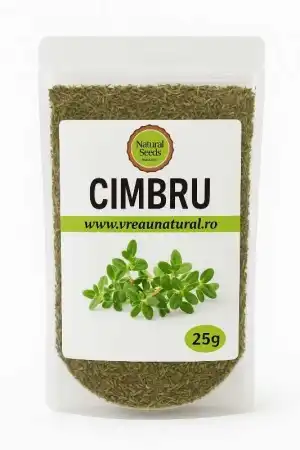
Thyme 25gr, Natural Seeds Product, wholesale Supreva
In stock | |
| Return period | The product is not returnable. |
| Delivery time (days) | 1-2 days |
| Country of dispatch |  Romania Romania |
| Destination countries |         |
Minimum quantity: 6
Choose multiple of 6
≈1.74 €
9.12 RON
Price with VAT ≈1.93 €
10.12 RON
259 other people chose this product.
Benefit from secure payments through Supreva payment methods.
Description
Thyme is a plant from the mint family that you probably recognize from your spice kit. But it is much more than an ingredient. Its range of use is impressive and has over 400 subspecies. The ancient Egyptians used it in their embalming practices, while the ancient Greeks used it as incense. Thyme is the most popular herb used in cooking, traditional in any kitchen. Few people know that, in winter, thyme is the ally of a strengthened body, full of energy and protected from the cold. From the spice to the volatile oil, any form of thyme is beneficial to your health. Do not bypass it in the kitchen, but put the natural extract in your medical kit as well because it will be of real use to you. It is the perfect remedy for infections, lungs affected by smoking and cold weather, asthma and colds. Prepare a thyme tea when you feel that the cold wants to settle comfortably in your body. If you have a stuffy nose, try the same treatment to be able to breathe normally. Moreover, the nasal secretions are normalized after only the day you drank your unsweetened tea from this plant in the morning and in the evening. If your eyes are tired, try warm compresses in the evening, before going to bed. For acute cold symptoms, four cups of thyme tea a day are absolutely necessary. You can also try the volatile oil that you dissolved in a little water. Place a compress from the mixture on your chest or stomach and you can sleep peacefully. Wash your hands with soap and plenty of water after using the volatile oil, to avoid unwanted poisoning. You can also opt for the infusion with thyme tea, to clear the airways. For 15 minutes, stay over the bowl of hot tea and you can finally have a peaceful sleep. The tincture is also effective for colds and treating lung infections. It is administered four times a day, and the treatment will be doubled by citrus fruits and fresh fruits throughout the day. However, specialists warn against excesses. A larger dose of tincture or essential oil can cause irritation, dizziness, vomiting and profuse sweating. The undiluted volatile oil acts quickly and can cause severe migraines. If you feel any of these effects, stop your natural treatment and consult your doctor. Thanks to its distinctive taste, thyme has remained a culinary element until now. But thyme is also quickly gaining a reputation for its medicinal qualities, such as its ability to help treat acne and high blood pressure. In a study conducted on thyme tincture, the results were impressive. This natural herbal preparation fought pimples better than acne products, which included benzoyl peroxide. Time will tell if this remedy is an effective treatment for acne. Thyme essential oil, which is obtained from its leaves, is often used as a natural cough remedy. In a "Source Source" study, a combination of thyme leaves and ivy helped relieve coughs and other symptoms of acute bronchitis. The next time you experience a cough or sore throat, try drinking thyme tea. Thyme is a good source of copper, fiber, iron and manganese. Thyme is a wonderful ingredient used in cuisines around the world, especially in France, Italy and across the Mediterranean. Wholesale product available on the B2B marketplace, Supreva Market For Business, at wholesale prices directly from the manufacturer.
Opinions (0)
Similar Products

From the same vendor

I want to receive offers and business information to expand my business
An online community that allows small business owners and independent brands to sell and buy wholesale, at the manufacturer's price, from one place.
Oceano Mercado S.R.L.
J18/930/09.11.2020, RO37397636
Strada Cornestilor, no. 34, Balesti, county Gorge