Questions? Call: 0763 484 869 Monday-Friday | 08:00 - 18:00


Free delivery up to 10% from the order value
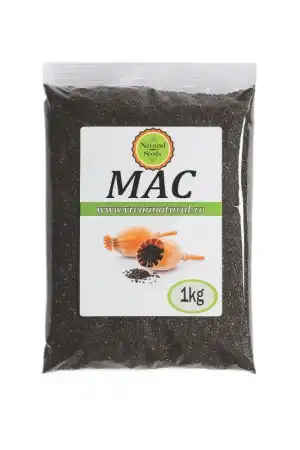
Poppy seeds, Natural Seeds Product, 1kg, wholesale Supreva
In stock | |
| Return period | The product is not returnable. |
| Delivery time (days) | 1-2 days |
| Country of dispatch |  Romania Romania |
| Destination countries |         |
Minimum quantity: 1
≈5.95 €
31.29 RON
Price with VAT ≈6.60 €
34.73 RON
30 other people chose this product.
Benefit from secure payments through Supreva payment methods.
Description
DescriptionPleasant to taste, poppy seeds are nutritious oleaginous seeds used as cooking spices. Although they are the seeds obtained from the dried fruits of the forest, they are completely free from the harmful side effects of other poppy plant products, such as the opium poppy. The poppy plant is a biennial plant from the Middle East and Asia Minor belonging to the Papaveraceae family, of the genus: Papaver. Scientific name: Papaver somniferum. The ancient Egyptians were aware of the harvesting of poppy seeds from the heads of poppy fruits. Through Arab traders, opium cultivation spread to Persia, ancient Khorasan and India. Today, poppy seeds are a well-established commercial crop in many parts of the world, including the Czech Republic, Germany, Turkey, France, India and the Eastern European region. Poppy seeds are popular ingredients and are generally used as spices and for oil pressing. The seeds, indeed, are very safe to be used as food. The health benefits of poppy seeds Poppy seeds are made up of many plant-derived chemical compounds that have antioxidant, disease-preventing, and health-promoting properties. Their unique flavor is due to many fatty acids and essential volatile oils, which comprise about 50% of their net weight. The seeds are especially rich in oleic and linoleic acids. Oleic acid, a monounsaturated fatty acid, helps lower LDL or "bad cholesterol" and increases HDL or "good cholesterol" levels in the blood. Research studies suggest that the Mediterranean diet rich in monounsaturated fatty acids helps prevent coronary heart disease and stroke by promoting a healthy blood lipid profile. 100 g raw seeds provide 19.5 g or 51% of the recommended daily levels (RDA) of fiber. A large part of this fiber is a metabolically inert content, which helps to increase the mass of food by absorbing water in the digestive tract and, therefore, by reducing the problem of constipation. In addition, dietary fiber binds to bile salts (a product of cholesterol) and decreases their reabsorption in the colon. Thus, it contributes to the further lowering of LDL cholesterol levels in the blood. The seeds are excellent sources of vital B complexes such as thiamine, pantothenic acid, pyridoxine, riboflavin, niacin and folic acid. Many of these vitamins function as co-factors in the metabolism of the substrate, especially fats and carbohydrates in the human body. Poppy seeds provide good levels of minerals such as iron, copper, calcium, potassium, manganese, zinc and magnesium. Copper used in the production of red blood cells. Zinc is a co-factor in many enzymes that regulate growth and development, sperm generation, digestion and nucleic acid synthesis. Potassium is an important component of cellular and body fluids that helps control heart rate and blood pressure. The human body uses manganese as a cofactor for the important antioxidant enzyme, superoxide dismutase. Raw poppy seeds contain very small levels of opium alkaloids, such as morphine, thebaine, codeine, papaverine, etc. When consumed in food, these compounds produce a minimal effect on the human nervous system. On the contrary, these chemicals have been found to have some beneficial effects on the human body; calms nervous irritability, acts as an analgesic. The seed extracts were useful in the pharmacy and in many traditional medicines in the preparation of cough mixtures, expectorants, etc. Poppy seeds (Papaver somniferum), nutritional value per 100 g. Energy 525 Kcal 26% Carbohydrates 28.13 g 22% Protein 17.99 g 32% Total fat 41.56 g 139% Cholesterol 0 mg 0% Fiber food 19.5 g 51% Vitamins Folate 82 μg 20% Niacin 0.896 mg 5.5% Pantothenic acid 0.324 mg 65% Pyridoxine 0.247 mg 19% Riboflavin 0.100 mg 8% Thiamine 0.854 mg 71% Vitamin A 0 IU 0% Vitamin C 1 mg 2% Vitamin E 1.77 mg 12% Vitamin K 0 mg 0% electrolytes Sodium 26 mg 2% Potassium 719 mg 15% minerals Calcium 1438 mg 144% Copper 01.627 mg 181% Iron 9.76 mg 122% Magnesium 347 mg 87% Manganese 6.707 mg 292% Phosphorus 870 mg 124% Selenium 13.5 pg 24% Zinc 7.9 mg 72% Wholesale product available on the B2B marketplace, Supreva Market For Business, at wholesale prices directly from the manufacturer.
Opinions (0)
Similar Products
From the same vendor
I want to receive offers and business information to expand my business
An online community that allows small business owners and independent brands to sell and buy wholesale, at the manufacturer's price, from one place.
Oceano Mercado S.R.L.
J18/930/09.11.2020, RO37397636
Strada Cornestilor, no. 34, Balesti, county Gorge