Questions? Call: 0763 484 869 Monday-Friday | 08:00 - 18:00

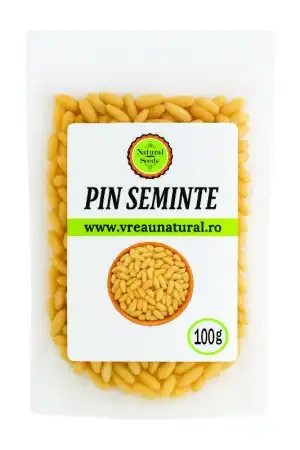
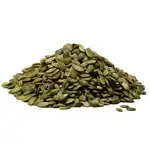
Pine Seeds, Natural Seeds Product, 100 gr, wholesale Supreva
In stock | |
| Return period | The product is not returnable. |
| Delivery time (days) | 1-2 days |
| Country of dispatch |  Romania Romania |
| Destination countries |         |
Minimum quantity: 1
≈3.93 €
20.56 RON
Price with VAT ≈4.36 €
22.82 RON
Benefit from secure payments through Supreva payment methods.
Description
Pine seeds are the edible seeds of pine trees (family Pinaceae, genus Pinus). About 20 pine species produce seeds large enough to be worth harvesting; in other pines, the seeds are also edible, but are too small to have any significant value as human food. Pine seeds are prominently consumed in several cuisines around the world, particularly as part of Brazilian cuisine, Middle Eastern cuisine, Chinese cuisine, Italian cuisine, Japanese cuisine, Korean cuisine, Mongolian cuisine, Mexican cuisine, Russian cuisine, and of various American cuisines. This widespread geographic consumption makes it recognizable in the context of global cuisine. It takes anywhere from 15 to 25 years for trees to start producing seeds and up to three times that to reach peak production. Most crops in North America come from wild, uncultivated trees. For the most part, the seeds are harvested by hand, a factor that contributes to their expensive price. Pine seeds are found in pine cones and take about 18 months to mature. Since pine nuts are ready to harvest 10 days or so before the cone begins to open, they are very difficult to remove. To speed up and ease the process, the cones are placed in pits and left in the sun to dry for 20 days. Next, the cones are destroyed, releasing the seeds, which are then separated from the cone by hand. This is another time-consuming and patient-testing task. The pine cone is not the only covering for the seed; each pine nut has two shells that must be removed before eating. Some of these shells are thin and easy to peel, while others are thicker and more difficult. All of the above factors contribute to the perceived high price of pine nuts. Pine nuts are small, ivory-colored, oblong seeds about 1 cm long. When raw, the seeds have a soft texture and a sweet flavor. They are often lightly toasted to bring out the flavor and give them a little crunch. Pine nuts are eaten by many cultures around the world and are known by many names. In the US, the most popular use is in pesto or as a crunchy salad dressing. They are also good for use in desserts such as shortbread and to add flavor to hummus. Wholesale product available on the B2B marketplace, Supreva Market For Business, at wholesale prices directly from the manufacturer.
Opinions (0)
Similar Products
From the same vendor

I want to receive offers and business information to expand my business

An online community that allows small business owners and independent brands to sell and buy wholesale, at the manufacturer's price, from one place.
Oceano Mercado S.R.L.
J18/930/09.11.2020, RO37397636
Strada Cornestilor, nr. 34, Balesti, jud. Gorj