Questions? Call: 0763 484 869 Monday-Friday | 08:00 - 18:00

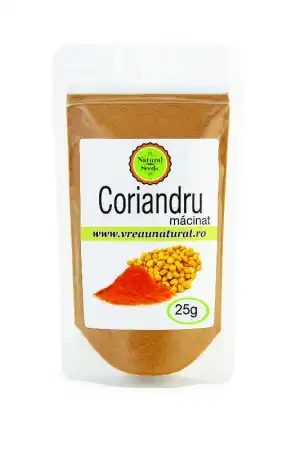
Ground coriander 25gr, Natural Seeds Product, wholesale Supreva
In stock | |
| Return period | The product is not returnable. |
| Delivery time (days) | 1-2 days |
| Country of dispatch |  Romania Romania |
| Destination countries |           |
Minimum quantity: 6
Choose multiple of 6
≈1.44 €
7.44 RON
Price with VAT ≈1.60 €
8.26 RON
133 other people chose this product.
Benefit from secure payments through Supreva payment methods.
Description
Coriander is a common herb used to flavor food. It comes from the Coriandrum sativum plant and is similar to parsley, carrots and celery. Coriander can lower blood sugar by activating certain enzymes. In fact, it is strong enough that people with low blood sugar should use it with caution. Add coriander seeds to salads, to get a taste like the one preferred by housewives in Russia, or in curry-type dishes, like those in India. You can also use them when preparing German or Italian sausages or Belgian beer based on barley. Before adding them to food, you can fry or heat them to intensify their aroma. Coriander: properties and benefits Coriander is rich in volatile oil (linalool, pinene, geraniol, borneol, terpineol, citronellol, carvone, camphor), fatty acids, protein substances, amino acids, sitosterols, tocopherols, coumarins, caffeic acid, it also has impressive amounts of vitamins (A, B, C, E, K) and minerals (potassium, iron, phosphorus, magnesium, zinc, calcium). These substances offer carminative, stomachic, bactericidal, fungicidal and spasmolytic properties. It is also a natural tonic for the body and at the same time has a mild sedative effect. 1. Prevents the onset of diabetes. Recent studies have shown that compounds from coriander leaves cause anti-hyperglycemic insulin. This phenomenon helps to maintain blood sugar within normal parameters. A few fresh coriander leaves, consumed daily, prevent the onset of diabetes, without changing the way of life. 2. It lowers the bad cholesterol in the blood. Coriander is a chemical substance that helps to metabolize lipids in the blood, so it helps to keep bad cholesterol under control. In addition, coriander is rich in vitamin C and antioxidants, which favor combustion at the cellular level and help eliminate toxins from the body. 3. Improves digestion. Coriander preparations and fresh leaves, consumed regularly, considerably improve digestion. The substances it contains favor the secretion of gastric juices. Digestion takes place in the most normal conditions even when heavy food is consumed. 4. Reduce inflammation caused by arthritis. Researchers have demonstrated that fresh coriander leaves contain elements that help reduce inflammation in the body. This effect was observed regardless of the type of inflammation. In the case of people with arthritis, considerable improvements have been observed. If you want to get a dish with an Asian flavor, add coriander roots to soups or pasta, as in Thai dishes. You can add the seeds to soups or fried dishes based on chicken meat, but also to puddings. If you want to get a dish with lamb meat similar to those served in Arab kitchens, add coriander while preparing lamb or meat fillings. This plant goes very well in combination with ham and pork, especially if orange is added to it. It gives a special flavor to fish dishes and together with other spices, it can be in the mixture that is added on top of chicken or fish, before being put in the oven or on the grill. You can use coriander leaves in cooked dishes, but also in sauces, soups, salads or added on top of meat before it is fried or baked. If you want, you can also put this plant in marinades - marinate the veal in a mixture of oil, lemon juice, coriander leaves, salt and pepper before frying or in the oven. Add the coriander leaves to the food when it is almost ready, so that they do not lose their flavor during the cooking process. Coriander is full of antioxidants that increase the body's immunity, the seeds can also be anti-cancer, anti-inflammatory and neuroprotective. Coriander can protect your heart by lowering blood pressure and LDL (bad) cholesterol while increasing HDL (good) cholesterol. A diet rich in spices appears to be associated with a lower risk of heart disease. The antioxidants in cilantro may reduce brain inflammation, improve memory and reduce anxiety symptoms, although more research is needed. Wholesale product available on the B2B marketplace, Supreva Market For Business, at wholesale prices directly from the manufacturer.
Opinions (0)
Similar Products


From the same vendor

I want to receive offers and business information to expand my business

An online community that allows small business owners and independent brands to sell and buy wholesale, at the manufacturer's price, from one place.
Oceano Mercado S.R.L.
J18/930/09.11.2020, RO37397636
Strada Cornestilor, nr. 34, Balesti, jud. Gorj