Questions? Call: 0763 484 869 Monday-Friday | 08:00 - 18:00


Free delivery up to 10% from the order value
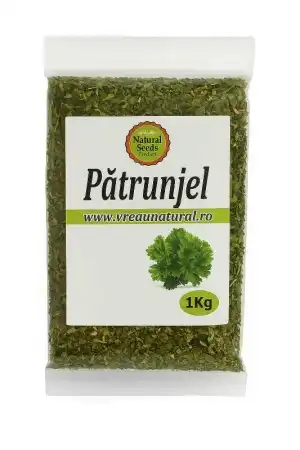
Dry parsley 1Kg, Natural Seeds Product, wholesale Supreva
In stock | |
| Return period | The product is not returnable. |
| Delivery time (days) | 1-2 days |
| Country of dispatch |  Romania Romania |
| Destination countries |         |
Minimum quantity: 1
≈3.62 €
19.02 RON
Price with VAT ≈4.02 €
21.11 RON
8 other people chose this product.
Benefit from secure payments through Supreva payment methods.
Description
Parsley is a popular herb often used in American, European and Middle Eastern cuisine. It is commonly used to enhance the flavor of dishes such as soups, salads and fish recipes. In addition to its many culinary uses, parsley is highly nutritious and has been shown to have many powerful health benefits. Two tablespoons (8 grams) of parsley provide: Calories: 2Vitamin A: 12% of the RDIVitamin C: 16% of the RDIVitamin K: 154% of RDIVitamin A is an essential nutrient that plays a key role in immunity and eye health. Plus, it's important for your skin and can improve skin conditions like acne. Parsley is also an excellent source of vitamin K, a nutrient that supports bone and heart health. In fact, just two tablespoons (8 grams) of parsley provide more vitamin K than you need in a day. In addition to its role in bone and heart health, vitamin K is essential for proper blood clotting, which can help prevent excessive bleeding. In addition, parsley is packed with vitamin C, a nutrient that improves heart health and is vital for your immune system. Vitamin C also acts as a powerful antioxidant, protecting your cells from damage caused by unstable molecules called free radicals. In addition, parsley is a good source of the nutrients magnesium, potassium, folate, iron and calcium. Parsley contains several important nutrients such as vitamins A, K and C. It is also a good source of the minerals calcium, iron, magnesium and potassium. Along with eating a balanced diet, adding parsley to your cooking can help support healthy blood sugar levels. Parsley contains many plant compounds, including carotenoid antioxidants, which have been shown to benefit heart health by reducing heart disease risk factors. For example, diets rich in carotenoids have been shown to improve heart disease risk factors, such as chronic inflammation, as well as high blood pressure and LDL (bad) cholesterol levels. Moreover, studies the population indicates that diets rich in carotenoids can reduce the risk of heart diseases, such as coronary heart disease. The well-known aromatic plant, parsley has antioxidant, detoxifying, anti-allergic, antitumor, liver tonic, antispasmodic, vasodilator, anti-rickets, anti-inflammatory, vermifuge, diuretic, etc. consumption of parsley tea is contraindicated for pregnant women because it can induce labor or cause spontaneous abortion, those who are breastfeeding because it reduces the secretion of breast milk. Exceeding the dose of 200 ml per day can cause nervous excitement, vomiting, nausea, hemorrhagic stool, diarrhea or other digestive disorders. Parsley tea should be consumed for no more than 10 consecutive days. Wholesale product available on the B2B marketplace, Supreva Market For Business, at wholesale prices directly from the manufacturer.
Opinions (0)
Similar Products


From the same vendor
I want to receive offers and business information to expand my business
An online community that allows small business owners and independent brands to sell and buy wholesale, at the manufacturer's price, from one place.
Oceano Mercado S.R.L.
J18/930/09.11.2020, RO37397636
Strada Cornestilor, no. 34, Balesti, county Gorge